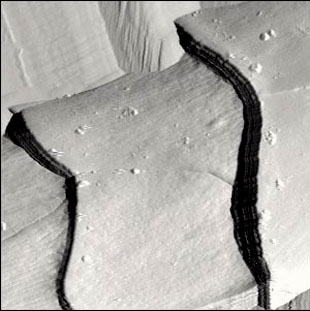
 Chemical, physical and biological structure of wool is explained by scientists. Characteristics of wool are derived from the structure of its fibers. The root of wool fiber is in the small opening in the skin called a follicle. Blood circulates through follicle, from which hair grows. Merino sheep have 6,200 hair follicles on each square centimeter of their skin. Slightly above the follicle, the fiber is covered with lanolin. At high magnification flakes can be seen, somewhat like fish scales. Every one consists of three layers, and they protect the rod-shaped cells. The hair is composed of two physically and chemically different half-cylinders of different structure. This structure provides bilateral structure of wool. One can say that this is a natural fiber crossing. In order to clearly see the structure of rod-like cells, we have to use a microscope that enlarges several million times. Chemical, physical and biological structure of wool is explained by scientists. Characteristics of wool are derived from the structure of its fibers. The root of wool fiber is in the small opening in the skin called a follicle. Blood circulates through follicle, from which hair grows. Merino sheep have 6,200 hair follicles on each square centimeter of their skin. Slightly above the follicle, the fiber is covered with lanolin. At high magnification flakes can be seen, somewhat like fish scales. Every one consists of three layers, and they protect the rod-shaped cells. The hair is composed of two physically and chemically different half-cylinders of different structure. This structure provides bilateral structure of wool. One can say that this is a natural fiber crossing. In order to clearly see the structure of rod-like cells, we have to use a microscope that enlarges several million times.
 Using electron microscopy we can see, that every wool fiber consists of two types of cells. Here you can see their different material, Ortocortex and Paracortex. This is the inside of the fibers, a structure extending through the entire structure of the fibers. It consists of a single molecule. This is very important for the properties of wool. Electron microscope can not enlarge more, but chemists can prove that it is a unique set of chains of molecules. They are able to develop these chains of smallest chemical fiber ingredients, amino acids.
 |
Analyses show that the fiber consists of various amino acids.
There are exactly 12 of them. A large number of characteristics of wool derive from these complex compounds. Synthetic fibers have a maximum of three amino acids. Each amino acid molecule contains an active group. So it has the ability to build a chain. This chain makes a spiral. This creates a more complex structure. This spiral explains why wool is so elastic. It is able to stretch and to return to previous form without distortion. At normal humidity merino wool can be stretched by about 30% without breaking, and later returned to the previous length. Interweaving of more fiber provides even greater flexibility. This microscopic image shows that the wool fibers are not directly connected and linked. Amino acids are linked with other chains. Thus it creates a link between the molecule chains. This finding explains the material in the form of micro fiber. These are the basic elements of the cells and fibers. |
|
What happens in the follicle?
Amino acids are delivered to the root of the follicle through the bloodstream.
There they create chains of molecules, but higher in the follicle they connect. So they build a strong fiber of wool. Wool fibers have a natural strength, thanks to a three-dimensional spiral structure built by the follicle. Different wax materials at the end of the follicle enhance natural strength. When the fiber leaves the follicle, it interweaves with other fibers in its vicinity and so we get typical appearance of wool. This interweaving explains many characteristics of wool. Average value of wool is determined practically. From a piece of raw wool pieces of plants and soil are removed and their quantity is determined. Then black hairs are taken. They are more visible than the white. For the test, the black hair is collected and put away.
 Washing the wool removes salt resulting of sweating, dirty grease and bits of dirt. These contaminants must be washed away, to disappear from the hair, to allow further processing of wool.
Wool fibers are able to combine in the felt. Of all the natural materials wool, due to its structure, combines the best in felt. With Arnos test for felt the ability of wool to create felt is determined. This test requires at least 30 minutes. One gram of wool is placed with an aqueous solution in a steel container. The testing machine, which moves in three dimensions, out of wool felt is created in the form of balls. Test result is diameter of felted balls. The smaller the ball, the better ability of wool to adsorb in felt. Important properties of wool are its looseness and ability to restore the original state. Wool is put under pressure, and it is determined to what extent it has returned to its original form. Wool is able to absorb water vapor in the weight of third of its own weight. Fat remaining on the fiber rejects drops of water. Geometric properties of wool, such as length and curl are of great importance for processing. Degree of permeability can easily and quickly be determined with the device for measuring air flow. Wool is closed in the chamber with a perforated lid, through which flows a current of air. Rated current of air passing through the wool fiber is read on the scale. Wool fibers have different length. It is important to determine the length and record it. Length is measured by the apparatus for measuring fiber length. The keyboard registers the length of each individual hair.
Washing the wool removes salt resulting of sweating, dirty grease and bits of dirt. These contaminants must be washed away, to disappear from the hair, to allow further processing of wool.
Wool fibers are able to combine in the felt. Of all the natural materials wool, due to its structure, combines the best in felt. With Arnos test for felt the ability of wool to create felt is determined. This test requires at least 30 minutes. One gram of wool is placed with an aqueous solution in a steel container. The testing machine, which moves in three dimensions, out of wool felt is created in the form of balls. Test result is diameter of felted balls. The smaller the ball, the better ability of wool to adsorb in felt. Important properties of wool are its looseness and ability to restore the original state. Wool is put under pressure, and it is determined to what extent it has returned to its original form. Wool is able to absorb water vapor in the weight of third of its own weight. Fat remaining on the fiber rejects drops of water. Geometric properties of wool, such as length and curl are of great importance for processing. Degree of permeability can easily and quickly be determined with the device for measuring air flow. Wool is closed in the chamber with a perforated lid, through which flows a current of air. Rated current of air passing through the wool fiber is read on the scale. Wool fibers have different length. It is important to determine the length and record it. Length is measured by the apparatus for measuring fiber length. The keyboard registers the length of each individual hair.
Different properties of wool fibers are of great importance, both for processing and maintenance of finished products.
There were thousands attempt to scientifically define the wool in practice.
A study of its properties is an inexhaustible source of tasks for scientists. |
|






